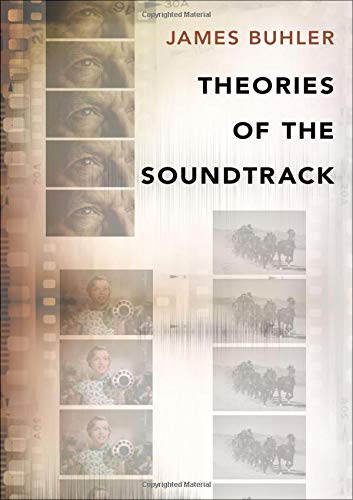
Theories of the soundtrack
Buhler, James
SUMARIO: Chapter 1: Introduction / Five Vignettes of Early Sound Film – The Hybridity of Sound Film – Sound Film, an Audiovisual Medium – Film Sound and «Occult Aesthetics» – This Volume // Chapter 2: Early Theories of Sound Film / Introduction: The Specificity of the Sound Film – The Statement on Sound and the Concept of Counterpoint – Sergei Eisenstein and Counterpoint – Vsevolod Pudovkin and Asynchronous Sound – The Case of Deserter – Perceptual Realism – Béla Balázs and the Physiognomy of the Voice – Rudolf Arnheim and the Unity of Sound – Harry Potamkin and the Compound Cinema // Chapter 3: Theories of the Classic Sound Film: Grammars and Typologies / Introduction – Sergei Eisenstein and Vertical Montage – Modes of Synchronicity – Aaron Copland and the Functions of Film Music – Functions – Reservations – Hanns Eisler and Theodor W. Adorno and Critical Theory – Contra Eisenstein –
The Negative Thesis: Sham Identity – Bad Habits – The Classical System and the Typological Analysis – Raymond Spottiswoode and Film Grammar – Siegfried Kracauer and the Types of Cinematic Sound – Roger Manvell and John Huntley and «Functional» Music – On the Difference between Realistic and Nonrealistic Music // Chapter 4: Language, Semiotics, Deleuze / The Linguistic Analogy – Jean Mitry and Language and Rhythm – Semiotics of Film/Semiotics of Music – Christian Metz and Aural Objects – Gilles Deleuze and the Movement-Image – Zero-Point: Perception-Image – Firstness: Affection-Image – First Intermediary Stage: Impulse-image – Secondness: Action-Image – Large Action Form – Small Action Form – Second Intermediary Stage: Reflection-image – Thirdness: Relation-Image // Chapter 5: Neoformalism and Four Models of the Soundtrack / Introduction: Semiotics and Formalism – Neoformalism – Kristin Thompson and the Analytical Approach – David Bordwell and the Music(ologic)al Analogy – Noël Carroll and Modifying Music – Formal Models of Music and Film – Kathryn Kalinak and Captain Blood – A Working Model of Film Music – General Considerations – Explicit Relations of Music to Narrative – Implicit Relations of Music to Narrative – Combining Implicit and Explicit Relations of Music to Narrative – Nicholas Cook and Multimedia Systems – David Neumeyer and Vococentrism – Annabel Cohen and the Congruence-Association Model // Chapter 6: Narratology and the Soundtrack / Introduction –
Narratology and Film – Narratology and the Soundtrack – Claudia Gorbman and Narrative Functions – Sarah Kozloff and the Narrative Functions of Dialogue – Michel Chion and the Audiovisual Scene – Giorgio Biancorosso and the Cinematic Imagination – Robynn Stilwell and the Fantastical Gap – Jeff Smith and Film Narration – Ben Winters and the Nondiegetic Fallacy – Guido Heldt and Levels of Narration – Music and Focalization – Focalization in Casablanca – Conclusion // Chapter 7: Critical Theory and the Soundtrack / Introduction – Hermeneutics of Suspicion – Ideology of Content (1): Topic Theory – Ideology of Content (2): The Table of Knowledge and Communicative Efficiency – Musical Topics: A Postcolonial Critique – Ideology of System – Ideology of Apparatus – Gender, Sexuality, and the Soundtrack – Soundtrack Theory and Feminist Theory – Soundtrack Theory and Queer Theory – Queering Asynchronous Sound – Queerness and Spectacle – Suddenly, Last Summer (1959) and the Economy of Sacrifice – The Hours (2002) and Sacrificial Inversion // Chapter 8: Psychoanalysis, Apparatus Theory, and Subjectivity / Introduction – The Appareil – Jean-Louis Baudry and the Basic Cinematographic Apparatus – Jean-Louis Comolli and Technique and Ideology – Mary Ann Doane and the Ideology of Sound Editing – Rick Altman and the Heterogeneity of Sound – James Lastra and Representational Technology – Music and the Appareil – The Dispositif – Jean-Louis Baudry and the Dispositif – Jean-Louis Comolli and the Dispositif – Christian Metz and Enunciation – Dispositif and Suture – Mary Ann Doane and the Fantasmatic Body – Pascal Bonitzer and the Voiceover and Voice-off – Suture and the Soundtrack – Jeff Smith and the Critique of Psychoanalytical Model of Film Music – Neo-Lacanian Theory – The Gaze and the Voice – Michel Chion and «There is No Soundtrack» – Mimetic Synchronization and the Sexual Relation – Michel Chion and Rendering // Chapter 9: Theories of the Digital Soundtrack / Introduction – The Ontological Divide – Animated Image, Stylized Sound: The Radical Effects of Digital Rendering – Music, Sound Design, and Digital Audio Production – Theories of Stereophonic Sound – Affective Intensities, the Withering of the Leitmotif, and the Withdrawal of Identity – Postclassical Cinema and the Fraying of Narrative – Conclusion // Bibliography // Index.
Theories of the soundtrack
Buhler, James
SUMARIO: Chapter 1: Introduction / Five Vignettes of Early Sound Film – The Hybridity of Sound Film – Sound Film, an Audiovisual Medium – Film Sound and «Occult Aesthetics» – This Volume // Chapter 2: Early Theories of Sound Film / Introduction: The Specificity of the Sound Film – The Statement on Sound and the Concept of Counterpoint – Sergei Eisenstein and Counterpoint – Vsevolod Pudovkin and Asynchronous Sound – The Case of Deserter – Perceptual Realism – Béla Balázs and the Physiognomy of the Voice – Rudolf Arnheim and the Unity of Sound – Harry Potamkin and the Compound Cinema // Chapter 3: Theories of the Classic Sound Film: Grammars and Typologies / Introduction – Sergei Eisenstein and Vertical Montage – Modes of Synchronicity – Aaron Copland and the Functions of Film Music – Functions – Reservations – Hanns Eisler and Theodor W. Adorno and Critical Theory – Contra Eisenstein –
The Negative Thesis: Sham Identity – Bad Habits – The Classical System and the Typological Analysis – Raymond Spottiswoode and Film Grammar – Siegfried Kracauer and the Types of Cinematic Sound – Roger Manvell and John Huntley and «Functional» Music – On the Difference between Realistic and Nonrealistic Music // Chapter 4: Language, Semiotics, Deleuze / The Linguistic Analogy – Jean Mitry and Language and Rhythm – Semiotics of Film/Semiotics of Music – Christian Metz and Aural Objects – Gilles Deleuze and the Movement-Image – Zero-Point: Perception-Image – Firstness: Affection-Image – First Intermediary Stage: Impulse-image – Secondness: Action-Image – Large Action Form – Small Action Form – Second Intermediary Stage: Reflection-image – Thirdness: Relation-Image // Chapter 5: Neoformalism and Four Models of the Soundtrack / Introduction: Semiotics and Formalism – Neoformalism – Kristin Thompson and the Analytical Approach – David Bordwell and the Music(ologic)al Analogy – Noël Carroll and Modifying Music – Formal Models of Music and Film – Kathryn Kalinak and Captain Blood – A Working Model of Film Music – General Considerations – Explicit Relations of Music to Narrative – Implicit Relations of Music to Narrative – Combining Implicit and Explicit Relations of Music to Narrative – Nicholas Cook and Multimedia Systems – David Neumeyer and Vococentrism – Annabel Cohen and the Congruence-Association Model // Chapter 6: Narratology and the Soundtrack / Introduction –
Narratology and Film – Narratology and the Soundtrack – Claudia Gorbman and Narrative Functions – Sarah Kozloff and the Narrative Functions of Dialogue – Michel Chion and the Audiovisual Scene – Giorgio Biancorosso and the Cinematic Imagination – Robynn Stilwell and the Fantastical Gap – Jeff Smith and Film Narration – Ben Winters and the Nondiegetic Fallacy – Guido Heldt and Levels of Narration – Music and Focalization – Focalization in Casablanca – Conclusion // Chapter 7: Critical Theory and the Soundtrack / Introduction – Hermeneutics of Suspicion – Ideology of Content (1): Topic Theory – Ideology of Content (2): The Table of Knowledge and Communicative Efficiency – Musical Topics: A Postcolonial Critique – Ideology of System – Ideology of Apparatus – Gender, Sexuality, and the Soundtrack – Soundtrack Theory and Feminist Theory – Soundtrack Theory and Queer Theory – Queering Asynchronous Sound – Queerness and Spectacle – Suddenly, Last Summer (1959) and the Economy of Sacrifice – The Hours (2002) and Sacrificial Inversion // Chapter 8: Psychoanalysis, Apparatus Theory, and Subjectivity / Introduction – The Appareil – Jean-Louis Baudry and the Basic Cinematographic Apparatus – Jean-Louis Comolli and Technique and Ideology – Mary Ann Doane and the Ideology of Sound Editing – Rick Altman and the Heterogeneity of Sound – James Lastra and Representational Technology – Music and the Appareil – The Dispositif – Jean-Louis Baudry and the Dispositif – Jean-Louis Comolli and the Dispositif – Christian Metz and Enunciation – Dispositif and Suture – Mary Ann Doane and the Fantasmatic Body – Pascal Bonitzer and the Voiceover and Voice-off – Suture and the Soundtrack – Jeff Smith and the Critique of Psychoanalytical Model of Film Music – Neo-Lacanian Theory – The Gaze and the Voice – Michel Chion and «There is No Soundtrack» – Mimetic Synchronization and the Sexual Relation – Michel Chion and Rendering // Chapter 9: Theories of the Digital Soundtrack / Introduction – The Ontological Divide – Animated Image, Stylized Sound: The Radical Effects of Digital Rendering – Music, Sound Design, and Digital Audio Production – Theories of Stereophonic Sound – Affective Intensities, the Withering of the Leitmotif, and the Withdrawal of Identity – Postclassical Cinema and the Fraying of Narrative – Conclusion // Bibliography // Index.